
How can I tell if a hearing aid is genuine?
You can tell a hearing aid is genuine when five things match: the serial number printed on the hearing aid, the serial number on the box, the serial number on your tax invoice, the manufacturer’s warranty card, and the serial number your audiologist reads from the hearing aid in the brand’s own fitting software. If any one of these is missing or does not match, ask questions before you pay.
Most fake or doubtful hearing aids are not clever copies. They are usually one of three things: a cheap sound amplifier sold as a “hearing machine”, a used (refurbished) hearing aid sold as new, or a hearing aid imported outside the brand’s official channel, which the brand’s Indian service may not cover. The checks below catch all three.
Where is the serial number on a hearing aid?
The serial number is printed on the hearing aid itself, usually in very small print on the side or back of the case, or inside the battery door. You may need a magnifying glass or your phone camera’s zoom to read it. Each hearing aid has its own serial number, so a pair has two different numbers — one for the left ear and one for the right.
Write both numbers down or take a clear photo of them. You need them for warranty repairs, insurance and CGHS paperwork, and to find a lost hearing aid if it is handed in.
What should the invoice show?
A proper invoice for a hearing aid should show:
- the seller’s name, address and GSTIN, and the invoice date;
- the brand and full model name, including the technology level (for example “7IX” or “I90”) and the style (RIC, BTE, ITC and so on);
- the serial number of each hearing aid, left and right;
- the price for each hearing aid (one ear) and the total;
- the warranty period, and what the warranty covers.
An invoice that says only “digital hearing aid” or “hearing machine”, with no brand, model or serial number, is a warning sign. Without the serial number on the invoice, the manufacturer may refuse a warranty repair.
What should the box label show?
The box label of a hearing aid sold in India should show the name of the device, the manufacturer’s name and address, a serial or batch number, and the date of manufacture. For an imported hearing aid, the label must also show the import licence number and the name and address of the importer in India [1]. These declarations are now set by the Medical Devices Rules, 2017, which govern the labelling of medical devices [1].
Check the date of manufacture too. A hearing aid made several years ago and sold as “new” may have been sitting in stock, used for trials, or bought outside the official channel.
Do hearing aids need a licence in India?
Yes. Hearing aids are regulated medical devices in India. Under the Medical Devices Rules, 2017, Class A and Class B medical devices came under the full licensing regime from 1 October 2022 [2][3], so a company that makes or imports hearing aids for sale in India needs a licence from the Central Drugs Standard Control Organisation (CDSCO). That is why the importer’s licence number appears on the label.
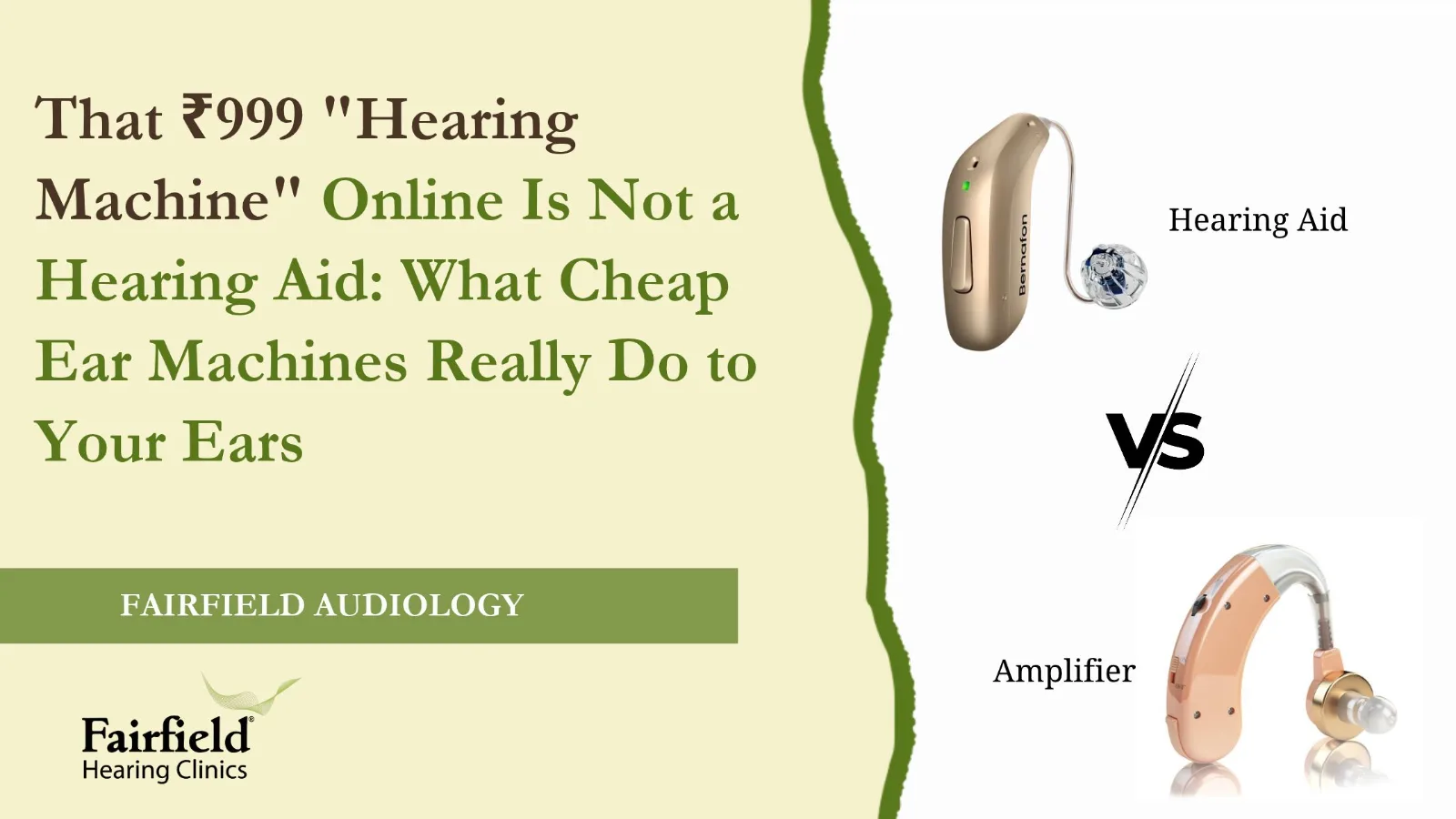
A sound amplifier sold online is not the same as a hearing aid, even if it looks similar and costs less. It is not programmed to your hearing test, and it usually has no serial-numbered warranty from a known manufacturer. See our hearing aid price guide for what you get at each price.
Can my audiologist check the hearing aid in the software?
Yes, and this is one of the strongest checks. When an audiologist connects a hearing aid to the manufacturer’s fitting software, the software reads the hearing aid and shows its details. Phonak’s Target fitting software, for example, shows the serial numbers of the connected hearing aids on its dashboard [4]. Signia, ReSound, Widex, Unitron and Bernafon each have their own fitting software, which also identifies the hearing aid that is connected.
So ask your audiologist to show you the screen at your fitting. The serial numbers on the screen should match the numbers on the hearing aid and on your invoice. A genuine hearing aid connects to its brand’s official software; a cheap copy or an amplifier does not.
One limit: the software proves the hearing aid is made by that brand. It does not, on its own, prove that the hearing aid is new and unused.
Can I ask the manufacturer to confirm my hearing aid?
Yes. You can contact the brand’s customer care in India with the serial numbers and your invoice, and ask whether the hearing aids were supplied through an authorised channel and when the warranty started. Each brand has its own process, so ask your clinic for the right contact. If the brand says the warranty started long before you bought the hearing aid, or that the serial number was sold in another country, raise it with the seller at once.
Some brands also ask you or the clinic to register the warranty when you buy. If your brand does this, make sure it is done and keep the confirmation.
What is a refurbished or grey-market hearing aid?
A refurbished hearing aid is a used hearing aid that has been cleaned, repaired and sold again. A grey-market hearing aid is a genuine hearing aid brought into India outside the brand’s official import channel. Neither is a fake, but both carry risks:
- the manufacturer’s warranty in India may be shorter, or may not be honoured at all;
- the hearing aid may be an older model or have older software;
- a used rechargeable battery may already hold less charge;
- the box may not carry an Indian importer’s name and licence number.
If you are offered a hearing aid at a price that seems far below the usual MRP, ask the seller in writing whether it is new, unused and supplied through the brand’s official Indian channel, and whether the warranty is the brand’s own.
What can I do if I was sold a fake or used hearing aid?
If you think you were sold a fake, used or wrongly described hearing aid, first write to the seller with your invoice and ask for a replacement or refund. If that does not work, contact the National Consumer Helpline: call 1915 or 1800-11-4000 (8 AM to 8 PM), or WhatsApp +91 88000 01915 [5]. The helpline tries to settle the complaint with the company before you go to court; if it is not settled, you can file a case at the consumer commission [5].
Keep the hearing aid, the box, the invoice and any messages with the seller. They are your evidence.
How does Fairfield make these checks easy?
At Fairfield Hearing Clinics, every hearing aid comes with a proper invoice showing the brand, model and serial number of each hearing aid, and the manufacturer’s warranty card. We fit new hearing aids supplied through each brand’s authorised channel, and we are glad to show you the serial numbers in the fitting software at your fitting. You can read the details in our terms, trial and refunds.
Bought a hearing aid somewhere else and not sure about it? Bring it to our clinic in New Friends Colony or Hari Nagar. We check hearing aids of any brand free and tell you what we find.
References
[1] S.S. Rana & Co. Simplifying compliance: medical device labelling now governed exclusively by the Medical Devices Rules (April 2026) — Rule 46 and Schedule IV of the Medical Devices Rules, 2017, after the Legal Metrology (Packaged Commodities) Amendment Rules, 2025. ssrana.in
[2] Central Drugs Standard Control Organisation. Circular F. No. 29/Misc/03/2022-DC(257), 30 September 2022 — Class A and Class B medical devices under the licensing regime from 1 October 2022. cdsco.gov.in (PDF)
[3] Central Drugs Standard Control Organisation, Government of India. Medical Devices Rules, 2017. cdsco.gov.in
[4] Phonak. Phonak Target 9.0 — step-by-step user guide (the dashboard shows the serial numbers of the connected hearing aids). phonak.com (PDF)
[5] Department of Consumer Affairs, Government of India. National Consumer Helpline — about us. consumerhelpline.gov.in